
Hamilton County Civil Docket Searches
Indiana MyCase covers non-confidential Hamilton County civil cases. Have the cause number? Use the Case tab. Searching by party instead? Try the Name tab for a person or organization, then narrow by Hamilton County, Civil category, status, and filing dates. A common business name can drag up unrelated cases, so compare the court, cause number, party role, and case type before trusting a match.
Cause numbers in Indiana encode the county and court. A pattern like 29D0X-YYMM-CT-###### packs in county code 29, a court identifier, filing period, civil type, and sequence. Keep the hyphens and leading zeros intact.
- Open MyCase and choose Case or Name.
- Select Hamilton County and the Civil category.
- Enter the cause number or narrow the party name.
- Compare type, court, filed date, status, and roles.
- Read the full CCS and request official copies from the clerk.
Hamilton Civil Docket Codes
Case codes are routing labels, nothing more. Hamilton County civil records use CC for collections, CT for torts, EV for evictions, MF for mortgage foreclosures, MI for miscellaneous civil matters, and SC for small claims. Estate and guardianship cases carry other codes, with different document-access rules attached. Domestic and protection matters are the most restricted.
- CC
- Civil collection.
- CT
- Civil tort.
- EV
- Eviction.
- MF
- Mortgage foreclosure.
- SC
- Small claims.
- PO
- Protection order, with tight access limits.
Use Indiana Administrative Rule 8 for the current uniform code structure.
Civil Dockets: What They Show
The Chronological Case Summary, or CCS, is the civil case timeline. It shows that a complaint, answer, motion, or order was filed. It may not supply every document image, though. A judgment amount or web balance can also fall short. Check any current sum with the Hamilton County Clerk. Then read the later satisfaction or release entries.
| Cause number | Court, filing period, type, and sequence. |
|---|---|
| Parties | Plaintiff, petitioner, defendant, respondent, and counsel. |
| Pleadings | Complaint, summons, service, answer, and counterclaim. |
| Events | Motions, settings, trials, orders, and continuances. |
| Judgment | Ruling, amount when shown, dismissal, or later satisfaction. |
| Access | Public document links, orders only, or courthouse access. |
Hamilton Small Claims Dockets
Small claims and eviction cases go to Superior Courts 4, 6, and 7. The county's Small Claims Forms page gathers complaints, counterclaims, eviction complaints, affidavits of debt, settlement forms, default-judgment forms, garnishment, releases, continuances, interrogatories, and proceedings supplemental in one place.
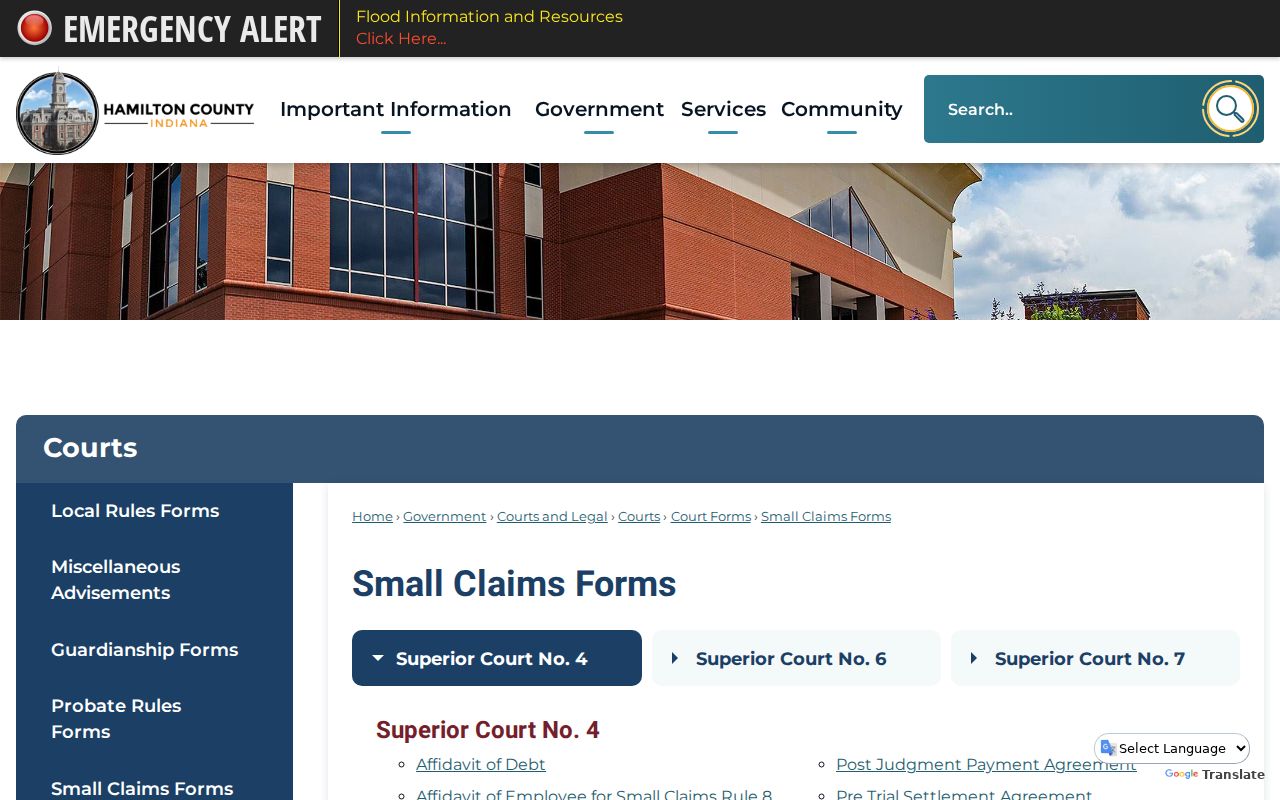
That form family shows how many steps can follow a complaint. It does not set one hearing day, one filing fee, or one public document set for every case.
What Cases Fill the Civil Docket
Hamilton County civil court dockets span several distinct case families. Their filing paths and access rules differ, so give the type code the same care as the party name.
- Collections and contract claims, including post-judgment collection steps.
- Civil tort and property disputes.
- Mortgage foreclosure and miscellaneous civil matters.
- Small claims and evictions in Superior Courts 4, 6, and 7.
- Estate, probate, and guardianship proceedings.
- Domestic and protection matters where public access is lawful.
An eviction entry only records a court event on a set date. It does not tell you where the case stands now, so read the order and the later docket entries, and note the access limits, before drawing any conclusion from it.
Hamilton Civil Judgment Records
A civil judgment rarely ends the docket. Garnishment, proceedings supplemental, payment agreements, releases, satisfaction, appeal, and amended orders can all appear afterward. Hamilton County also keeps a Judgment Dockets and Indexes page. It covers indexes from July 1, 2015 forward plus a small-claims judgment route.
Treat the index as a lead, not the full file. Confirm the cause number first. Then check the CCS and the clerk record. Look there for the operative judgment and its current satisfaction status. MyCase itself warns that online financial figures are not the official balance.
Hearings on the Civil Docket
Civil settings come in many forms. An initial hearing, pretrial conference, motion hearing, settlement conference, trial, damages hearing, eviction hearing, or proceedings supplemental can all land on the Hamilton County civil docket. The CCS may list the date, time, court, event type, and later result. A motion to continue does not move a date by itself. The judge's entered order controls.
Verify any setting through the CCS, the notice, counsel when applicable, or the assigned court. Court Administration offers a warning. Emailing a proposed filing to its administrative email will not place it on the docket. File through Indiana E-Filing with a certified provider, or use the clerk's authorized process.
Hamilton Civil Transfer Rules
Local rules let Hamilton County Circuit and Superior Courts transfer actions with consent. They re-docket them as originally filed. Follow the cause number and the later CCS history. Do not assume the first court label stays the hearing court. A transfer does not erase earlier entries.
For local assignment, transfer, filing, and calendar provisions, the Hamilton County administrative rules are the official source.
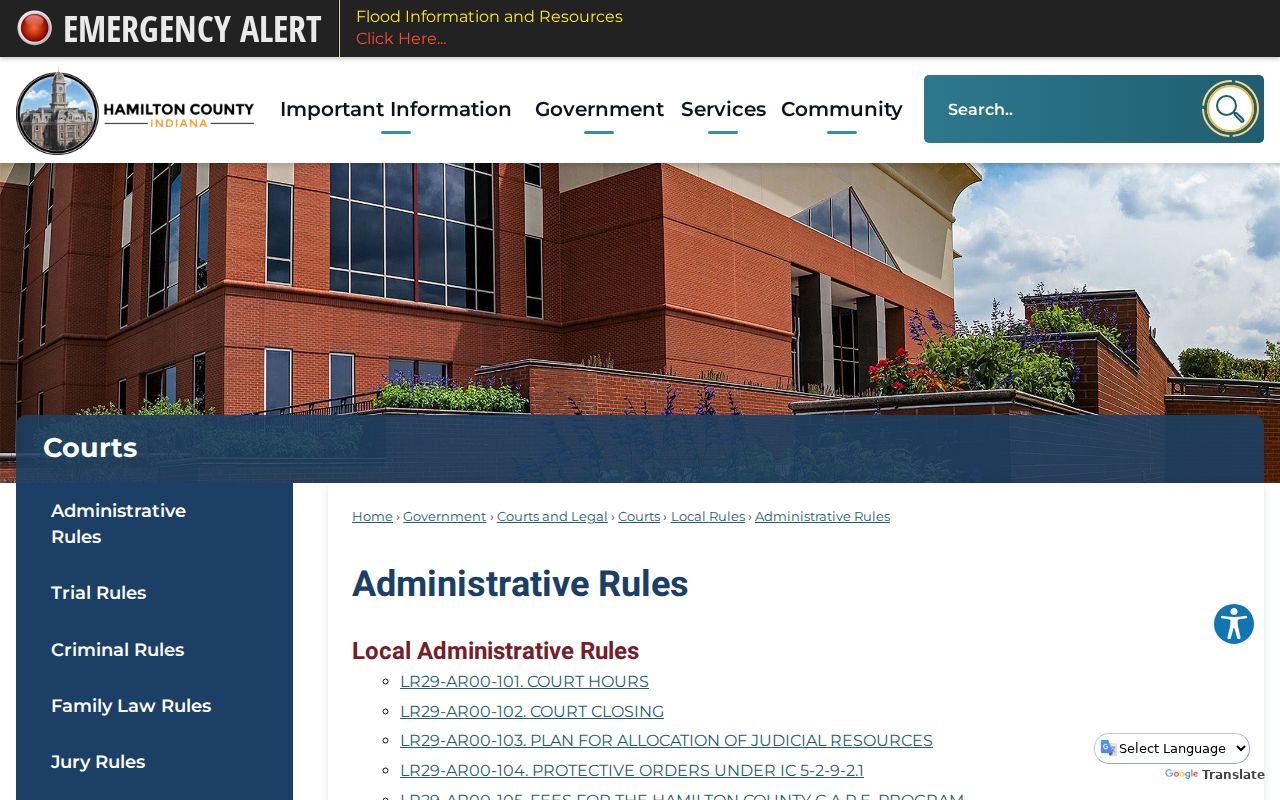
Check the rules page for current text whenever a court assignment or filing route affects a pending matter.
Hamilton Civil Record Channels
MyCase is the online starting point. If a document is not posted, public access may still exist at the court. The Hamilton County Clerk sits at One Hamilton County Square, Suite 106, Noblesville, Indiana. Hours are Monday through Friday, 8:00 a.m. to 4:30 p.m., with filing hours through 4:00 p.m. The office phone is 317-776-9629.
Need copies or certification? Use the Clerk Record Request page or ask the clerk about in-person or mail steps. Provide the cause number, court, document, date, and copy type. The civil fee PDF is dated January 1, 2025. It does not prove one universal copy fee, though. Indiana E-Filing creates filings; it is not a records request.
Who Can See Civil Dockets
Indiana opens its court records to the public. A rule, statute, or court order can say otherwise. Civil dockets are no exception. What you can pull online, though, depends on the type of case. Collection, tort, and foreclosure matters tend to show more documents than domestic, protection, guardianship, or eviction files. Some non-confidential papers still require a trip to the courthouse. Redaction hides protected personal details while the rest of the docket stays public.
Key access sources:
MyCase's public-document matrix distinguishes online documents, orders-only access, and courthouse access.
Indiana Access to Court Records Rules govern confidentiality, redaction, and requests.
Indiana Code 5-14-3 supplies the general public-record framework, subject to court-record rules.
A case that does not turn up is not necessarily destroyed or gone. It may simply sit somewhere you have not checked. Ask the clerk who maintains the file about lawful access, and trust the official court record over anything else.
Hamilton Civil Docket Verification
Read a public civil record with its dates and party roles intact. A complaint is only a claim. It is not a judgment. A default entry may later give way to relief, settlement, or satisfaction. An old judgment index proves nothing about a balance still unpaid today. The reliable method compares the CCS, the operative order, and every later entry. When the fact carries legal weight, fall back on a certified record. Note the date you retrieved the docket. New filings can change what an earlier view seemed to show. A phone call or a question at the counter can sort out which court holds a converted or transferred file. Staff will explain the process. They cannot tell you what claim to bring. Say whether you need a pleading, a plain order, a certified judgment, or a transcript. Each is a different product. A MyCase screen gives public information. Official copies come from the clerk or court reporter. Naming the document and its date beats asking vaguely for the complete record.
Hamilton Civil Docket Cross-Check
Before you rely on a Hamilton County civil court docket result or a copy you requested, check the latest entry date.