
Hamilton County Criminal Docket Searches
Indiana MyCase is the main public tool for non-confidential Hamilton County criminal cases. The Case tab takes a cause number, citation number, or cross-reference. Prefer the Name tab when you only have a person. It accepts a name, birth date, court, category, status, and filing dates. Unsure of the division? Pick Hamilton County and Criminal & Citation. Remember that MyCase is not the official record. Certified dispositions and decisive orders come from the Hamilton County Clerk or the maintaining court.
Save the full cause number from any notice. Hamilton County numbers start with county code 29. Then come a court identifier, the filing year and month, the case type, and a sequence. A pattern like 29D0X-YYMM-F6-###### helps you decode what you are looking at.
- Open MyCase and choose Case or Name.
- Enter one main identifier and select Hamilton County.
- Compare court code, case type, filing date, and role.
- Read the Chronological Case Summary in date order.
- Request an official copy from the clerk when needed.
Hamilton Criminal Docket Assignment
Hamilton County spreads its criminal dockets across several courts rather than one. The Major Felony office assigns MR cases and Level 1 through Level 5 charges among Circuit Court and Superior Courts 1, 2, 3, and 5. Local rules require a generally equal random allocation. A later related case can stay with the same court, though, so check the case history instead of assuming a fresh random draw.
Superior Courts 4, 6, and 7 handle most misdemeanors and Level 6 felonies. One local exception routes CM and F6 domestic battery, strangulation, and invasion-of-privacy matters to Superior Court 3.
| Case group | Court route | Search cue |
|---|---|---|
| MR, F1-F5 | Circuit; Superior 1, 2, 3, or 5 | Check the exact court code |
| Most CM/F6 | Superior 4, 6, or 7 | Search all three if unsure |
| Specified domestic CM/F6 | Superior 3 | Apply the local exception |
Criminal Dockets: What They Show
Indiana names this event trail the Chronological Case Summary, or CCS. It is not the full case file. One line may report a motion filed while its text stays off screen, and a charge remains an allegation until the disposition and order say what actually happened. Read the whole Hamilton County criminal court docket, later amendments included.
| Cause number | County, court, filing period, type, and sequence. |
|---|---|
| Charge block | Description, statute, level, filing date, and disposition. |
| Parties | State, defendant role, counsel, and changes. |
| Events | Filings, hearings, bond, pleas, orders, and sentencing. |
| Dates | Event, filed, and entry dates may differ. |
| Documents | Linked public orders where access rules allow. |
Hamilton Criminal Docket Terms
Codes steer a search; they never prove an outcome. Initial charges can be amended, dismissed, reduced, merged, or resolved under a later order.
- MR and F1-F5
- Murder and major felony types.
- F6 and CM
- Level 6 felony and misdemeanor types.
- Disposition
- The recorded outcome, read with the order.
- Setting
- A planned event that may be reset or cancelled.
- Filed
- An entry in the record, not a finding of guilt.
Note: A closed case may still receive probation, payment, modification, expungement, or appellate entries.
Criminal Case Stages on the Docket
Most Hamilton County criminal court dockets open with a charging event and an initial hearing. Pretrial settings, motions, bond action, and continuances often follow. A plea or trial brings the disposition, a conviction may bring sentencing, and later entries can address probation, restitution, modification, or appeal. Not every case hits each step.
Docket flow: Filing › Arraignment › Pretrial › Plea or Trial › Disposition › Sentencing
A setting only means the event was scheduled. It does not prove it occurred. Look instead for a result or a later order, and note that filing, hearing, and CCS entry dates can describe separate acts.
Hamilton Specialty Criminal Dockets
A case enters under normal assignment rules before any problem-solving transfer. The county's Drug Treatment Court lays out its treatment tracks for eligible participants.
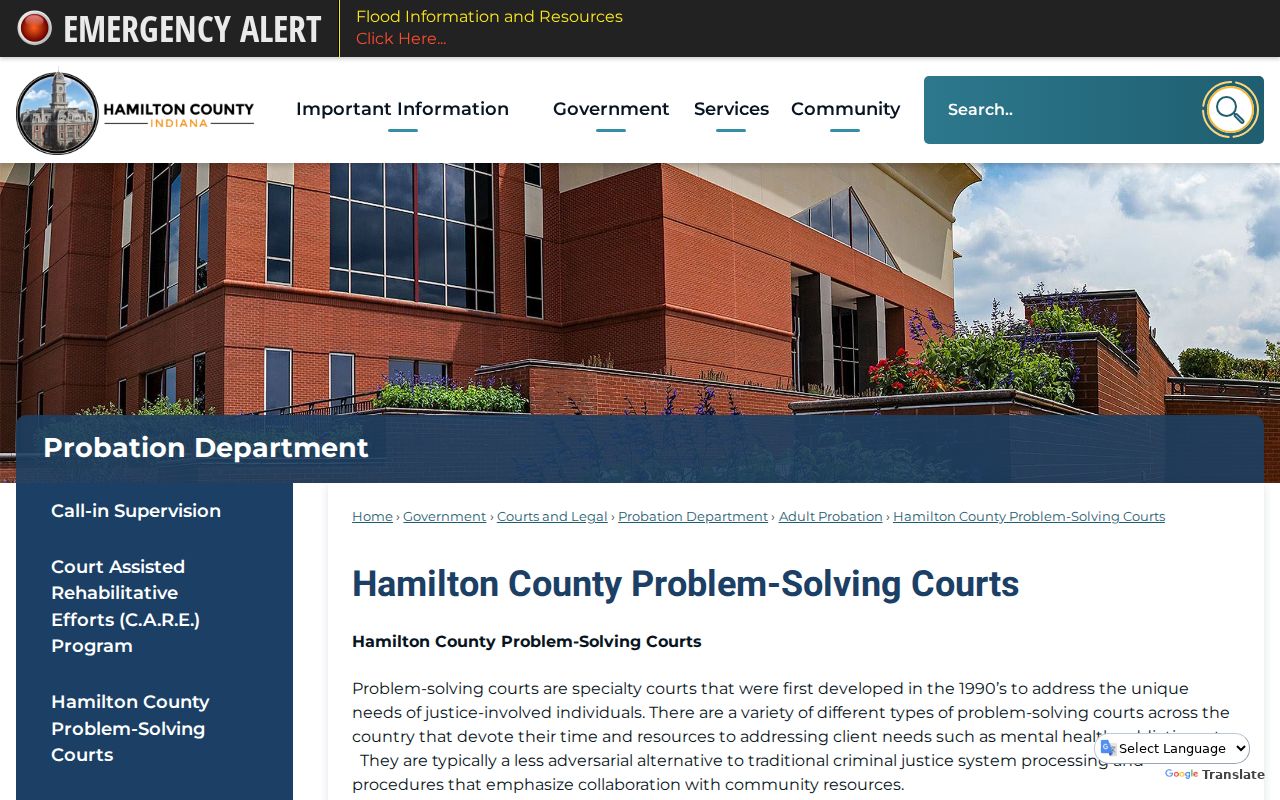
That page explains the program's structure; the public CCS shows only case events the court may release. Hamilton Veterans Court moved to Superior Court 7 in 2023 and admits participants on a voluntary, eligibility basis.
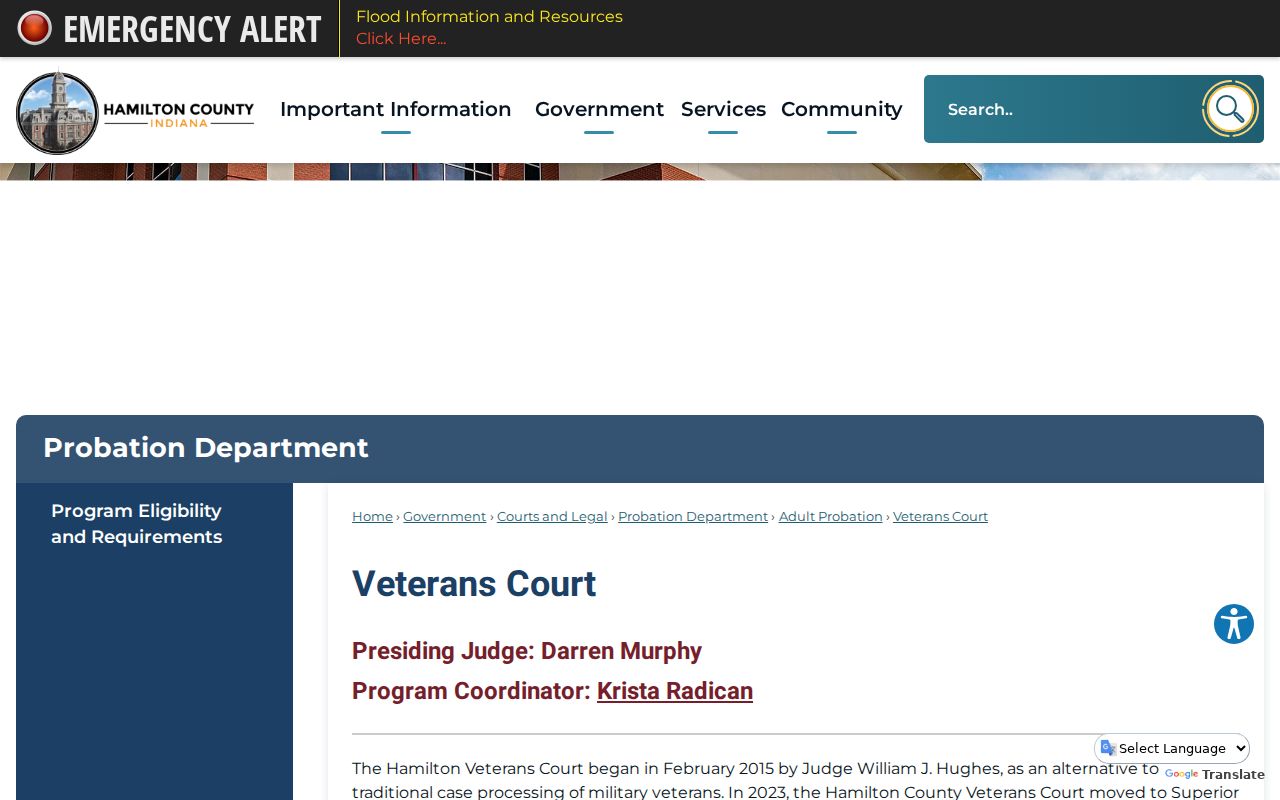
Program facts belong to the official page; treatment details may remain confidential.
Hamilton County Criminal Docket Courts
Hamilton Circuit Court plus Superior Courts 1 through 7 make up the county trial bench. The Hamilton County Clerk keeps the criminal records across all of them. Each judge controls settings and rulings. Hang onto the court identifier from the CCS. Court Administration can field a general question. But its own directory warns that documents sent there do not count as filed.
Criminal & Citation results can also carry city-court labels. Carmel, Fishers, and Noblesville each run limited city courts. Fishers' current rules cover infractions and ordinances rather than criminal cases. Do not confuse those courts with the county courts hearing major felonies.
Hamilton Criminal Docket Exhibits
Hamilton Superior Courts 1 through 3 handle exhibits through a Digital Evidence Portal. That workflow sits apart from the public MyCase CCS. Submitting an exhibit does not make it a public online document. Access follows Indiana court-record rules and any court order. For current local assignment and procedure details, the official Hamilton County criminal rules are the place to look.
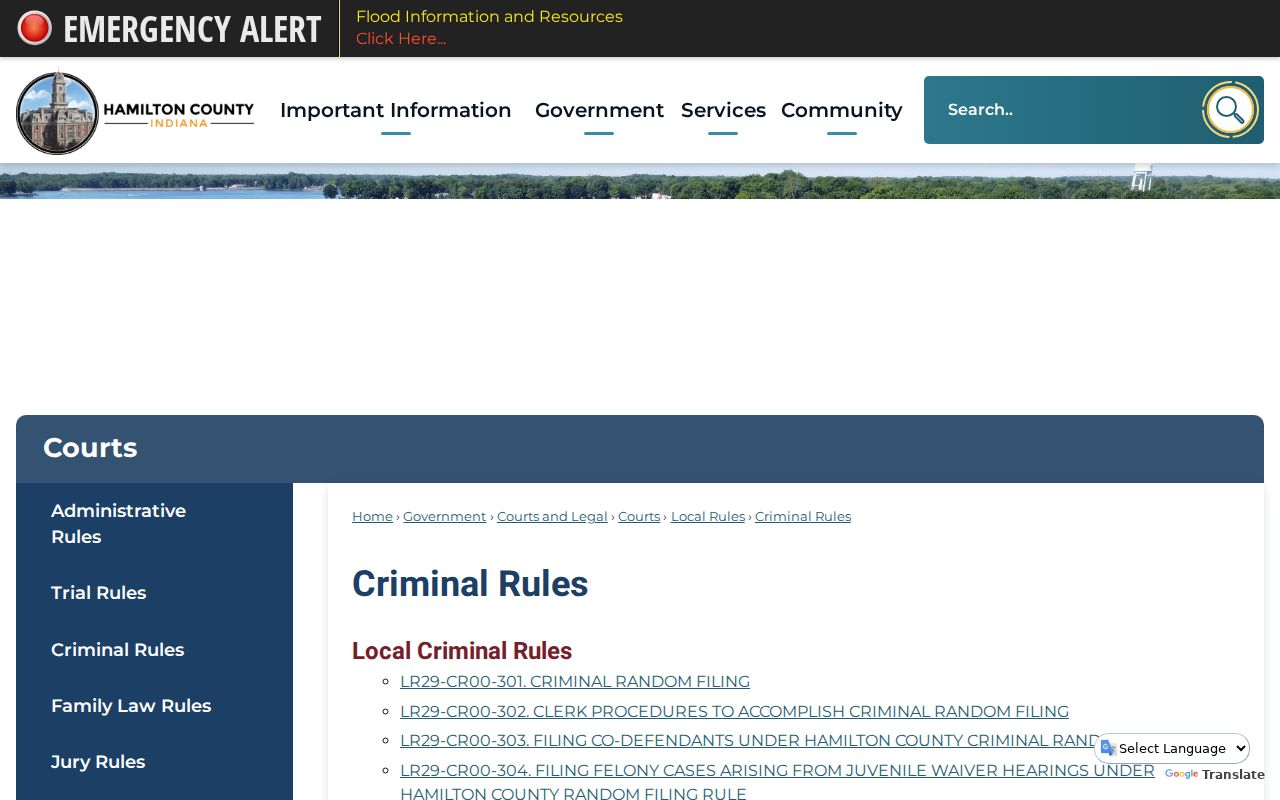
The rules page covers local procedure only. A transcript, exhibit, or certified order follows its own request process.
Hamilton Criminal Record Channels
MyCase is the quickest first check. But the clerk counter and the record-request channel still matter. The Hamilton County Clerk sits at One Hamilton County Square, Suite 106, Noblesville, Indiana. General office hours run Monday through Friday, 8:00 a.m. to 4:30 p.m. Filing hours end at 4:00 p.m. Call 317-776-9629 to confirm a closure or ask about a record missing online.
The Clerk Record Request route covers criminal and expungement records. Supply the cause number, court, document, date, and whether you need certification. The clerk sets fees per request rather than one flat rate. Indiana E-Filing is for filing, not for copies.
Access Rules for Criminal Dockets
Indiana presumes court records are open unless a law, rule, or order says otherwise. Online access can be narrower than what you get at the courthouse. A Hamilton County criminal docket may show the CCS but only selected orders, and sealed, expunged, juvenile, protected, or redacted material may not appear at all. An empty result does not prove no case exists.
Key access rules:
Indiana Access to Court Records Rules govern access, confidentiality, and redaction.
Indiana Administrative Rule 8 sets cause-number structure.
Indiana sealed-case guidance explains statutory, rule-based, and ordered limits.
When a document is absent, ask the maintaining clerk about lawful access; the originating court's official file controls.
Hamilton Criminal Docket Verification
Treat what you find as a snapshot. Bond, warrant, plea, and sentencing entries in a Hamilton County criminal docket can shift as a case moves. So compare the first charge with the final disposition and any later order before you rely on it. Watch what you copy, too. Protected identifiers and victim or witness data stay off-limits even when the filing itself is open. Rule-based redaction still applies to the rest of the record. Note your retrieval date. A later CCS event can undo a status that once looked final.
Sometimes an online search runs into a wall. An older converted case, a spelling problem, a court transfer, or a document limit can all defeat it. In that situation, call or visit the clerk's counter. Staff will point you to the right route. They cannot interpret a charge or tell you what motion to file. Be specific about the product you need. A plain copy, a certified order, a sentencing record, and a transcript are four different things. A MyCase printout is not a certified file. A CCS line is not a transcript or the full text of an order.